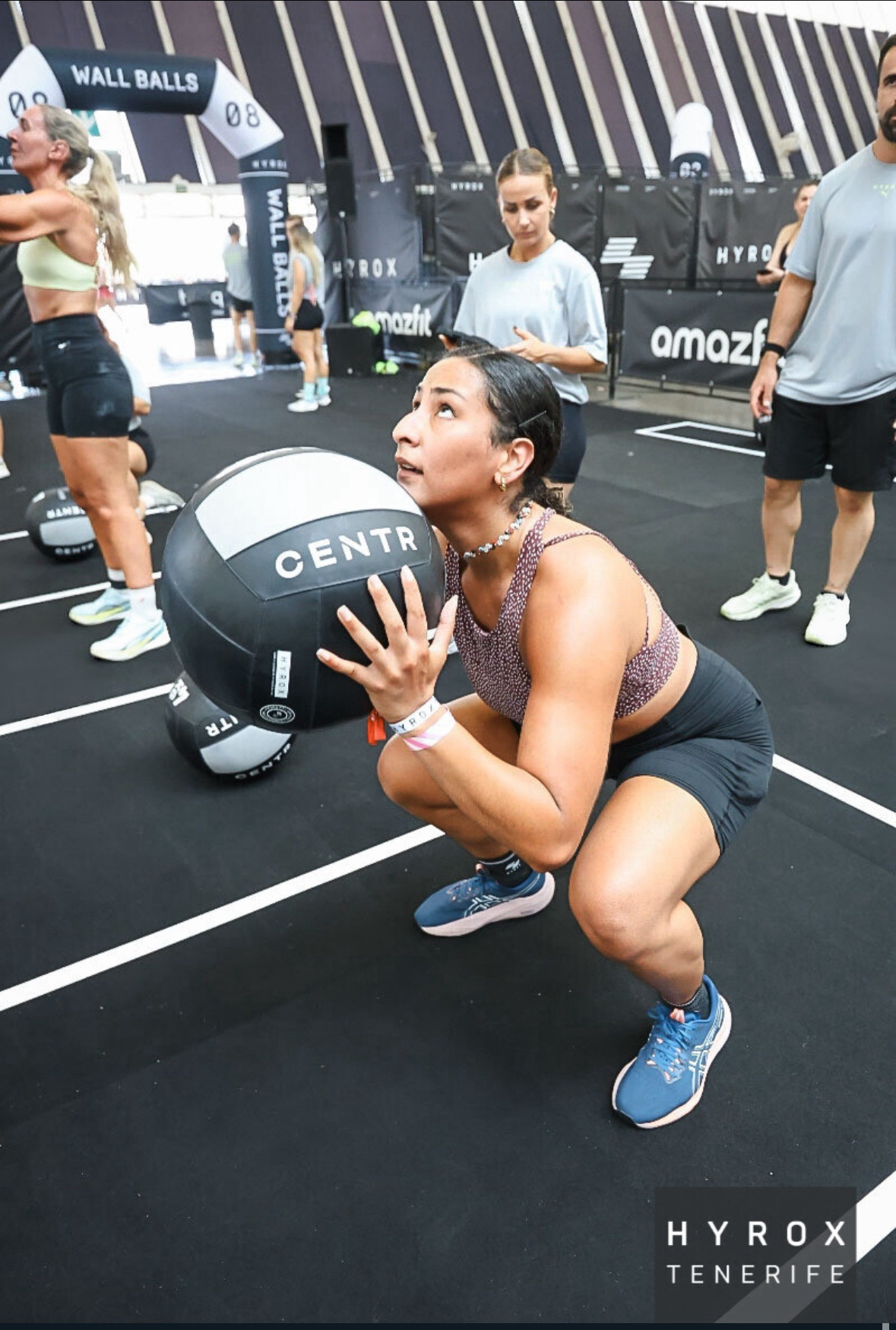
When I signed up for HYROX, I knew I was signing up for a physical challenge. Running, sled pushes, sled pulls, burpee broad jumps, and wall balls would test my strength and endurance in ways that traditional gym workouts didn't always do. But there was another part of competing that I didn't think as much about beforehand: being surrounded by other people's bodies and becoming more aware of my own.
It's hard not to notice what other women are wearing, how they look, or how their bodies compare to yours. You might find yourself looking at someone's outfit and thinking, "I could never wear that," or wondering if you would feel comfortable showing that much of your body. Maybe you start noticing parts of your own body that you weren't even thinking about before. You can walk into an event feeling pretty good about yourself and suddenly find yourself feeling self-conscious.
As an eating disorder therapist, I spend a lot of my time talking with athletes about body image, disordered eating, and the pressure to look a certain way in their sport. I talk about comparison, unrealistic expectations, and how easily our relationship with exercise can become tied to our appearance. But being in that environment myself reminded me that knowing these things professionally doesn't mean you're immune to experiencing them.
I had to put some of the same skills I encourage my clients to practice into action. I had to recognize when I was comparing myself, pay attention to how I was talking to myself, and remind myself why I was there in the first place. It was a good reminder that body image work isn't something you simply figure out once and never struggle with again. Sometimes, you have to keep practicing it.
When You Start Comparing Your Body to Everyone Around You
One thing I've noticed about competitive fitness is how easy it is to start looking around and evaluating yourself.
You might compare your body to the woman warming up next to you and wonder how someone can look a certain way and still be so strong. You might even catch yourself thinking about what you would need to change to feel more confident at the next competition.
And the interesting thing is that you can be having a perfectly good training experience and still have these thoughts.
Comparison doesn't always mean you dislike your body. Sometimes, it means you've walked into an environment where everyone is working toward a physical goal, and suddenly you're much more aware of your own appearance.
Social media can add another layer to this. We see athletes sharing training videos, race photos, workout routines, and sometimes very curated images of what fitness is supposed to look like. It's easy to start associating a particular body type with being strong, disciplined, or successful.
But here's what we forget: there isn't one way to look like an athlete.
In HYROX, people bring different strengths to the competition. Some are incredible runners. Others excel at the strength stations. People have different athletic backgrounds, body types, and abilities. You don't have to look like the person next to you to belong on that competition floor.
You Can Love Exercise and Still Struggle With Body Image
Sometimes, people assume that if you enjoy working out, you must have a healthy relationship with exercise. But enjoying movement and struggling with body image can absolutely coexist!
You can genuinely love HYROX and still compare your body to other competitors. You can look forward to training and still feel anxious about missing a workout. You can appreciate the strength you've built and still find yourself criticizing your appearance in the mirror.
And I think this is something we don't talk about enough.
You don't have to dislike exercise for your relationship with it to become complicated. Sometimes, the things you once did because they made you feel strong, confident, and accomplished can slowly become tied to how you feel about your appearance.
Maybe you start paying more attention to how many calories you're burning than how you feel during a workout. Maybe you feel like you've eaten too much and need to make up for it with exercise. Or maybe taking a rest day feels less like recovery and more like something you need to feel guilty about.
These are things I talk about with athletes in my practice. You can be someone who genuinely loves fitness and still struggle with disordered eating, body dissatisfaction, or compulsive exercise.
The goal isn't to stop enjoying exercise or give up the activities that make you feel good. It's to recognize when your relationship with movement starts being driven more by guilt, fear, or dissatisfaction than enjoyment.
You deserve to move your body because you want to, not because you feel like you have to earn food, change your appearance, or make up for something you've eaten.
What to Do When Comparison Creeps In
I don't think the goal is to never compare yourself to another person again. That's probably unrealistic, especially in environments where performance and physical appearance are so visible.
For me, it's more about recognizing when I'm doing it and deciding what I want to do next.
Here are a few things to keep in mind:
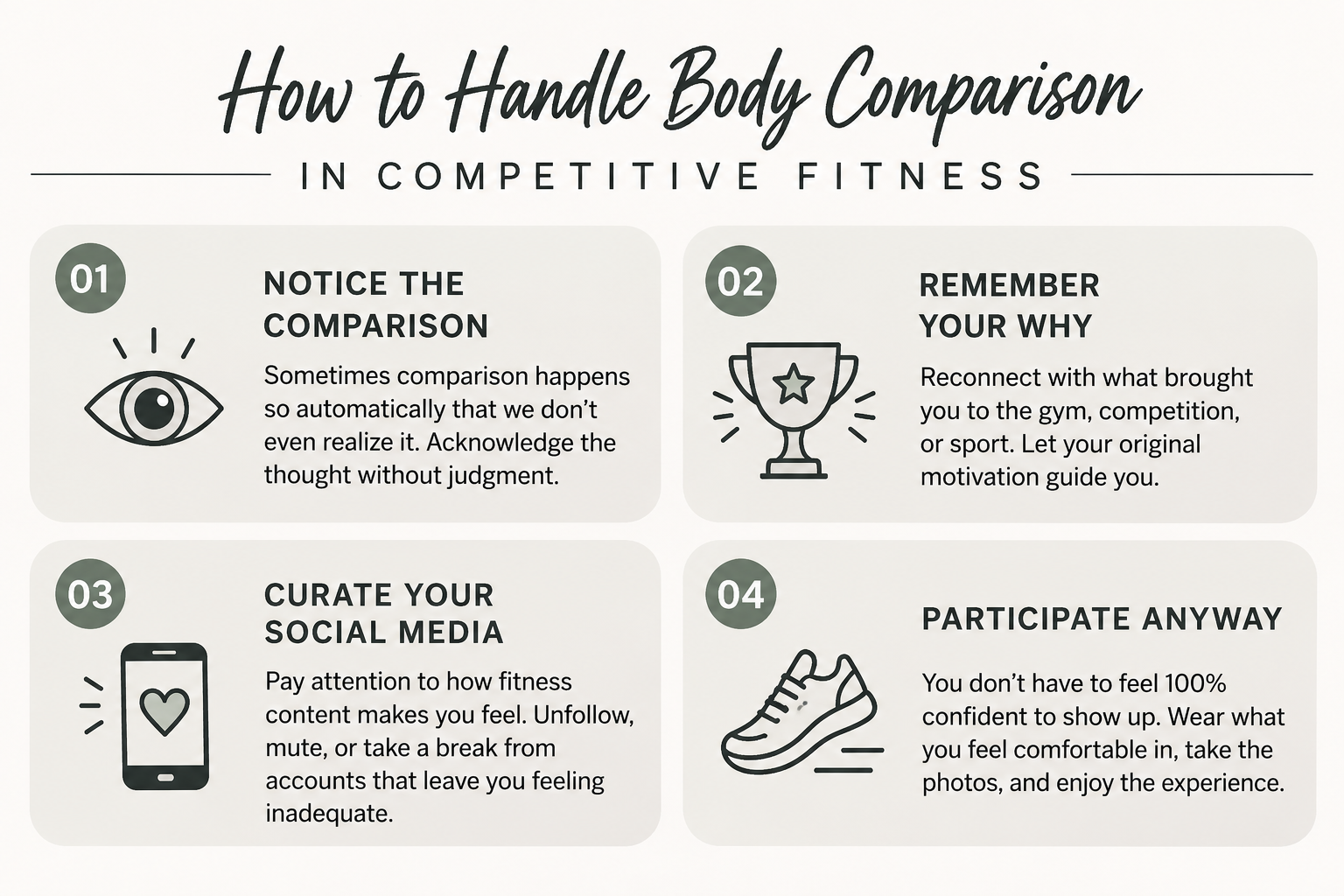
1. Notice when you're starting to compare.
Sometimes comparison happens so automatically that you don't even realize you're doing it. You might catch yourself looking around the gym, comparing your body to another competitor, or thinking about what you would need to change to look more like someone else.
Instead of criticizing yourself for having those thoughts, acknowledge them. Something as simple as, "I'm comparing myself right now," can help you recognize what's happening without getting pulled further into it.
2. Bring your attention back to why you're there.
Think about what brought you to the gym or motivated you to sign up for the competition in the first place. Maybe it was wanting a challenge, improving your performance, building strength, or simply trying something new.
When your attention shifts toward how you look compared to everyone else, remind yourself of what you actually want to get out of the experience. Your competition doesn't have to become about how you measure up to other people.
3. Be mindful of what you're consuming on social media.
It's easy to scroll through competition photos, training videos, and fitness content and start believing there's a certain way you're supposed to look to be considered fit or athletic.
Pay attention to how certain accounts make you feel. If following someone consistently leaves you feeling inadequate or more critical of your body, it might be worth taking a step back from that content.
You don't have to consume content that makes you feel worse about yourself.
4. Stop waiting until you feel confident to participate.
You don't have to love how you look in your competition outfit to compete. You don't have to feel completely confident in your body to show up at the gym.
Wear what you feel comfortable in, take the pictures, sign up for the competition, and let yourself enjoy the experience.
Don't let the belief that you need to look a certain way keep you from participating in something you genuinely love.
You Can Be Proud of Your Body Without Loving How It Looks Every Day
Sometimes, we put too much pressure on ourselves to have a positive body image all the time.
We're told to love our bodies, celebrate what they can do, and focus on the positives. And while those messages can be helpful, what happens when you just don't feel that way?
What happens when you put on your competition outfit and feel uncomfortable? Or when you see a picture of yourself after a race and immediately start focusing on what you don't like?
I don't think you have to force yourself to suddenly love what you see in the mirror.
Sometimes, body image work looks much less exciting than that. It might mean choosing not to criticize yourself after seeing a photo. It might mean wearing the outfit you feel comfortable in instead of spending the entire event worrying about what everyone else is wearing. It might mean taking a rest day without trying to compensate for it the next day.
And sometimes, it simply means recognizing that you are having a difficult body image day without allowing it to dictate everything else.
I can want to improve my HYROX time, work on my running, and continue challenging myself while also accepting that my body doesn't need to look different for me to be proud of what it can do.
Those things can coexist.
You Don't Have to Let Body Image Take Away Something You Love
I don't want anyone to walk away from this thinking that competitive fitness is inherently bad for body image or that struggling with comparison means you shouldn't participate.
I love having goals. I love challenging myself. I love the feeling of finishing something that I worked hard for.
But we also need to be honest about the pressure that can come with these environments. You can love the sport and still struggle with the culture surrounding it. You can enjoy exercise and still have moments when your relationship with your body feels complicated.
If you find that thoughts about your appearance, food, or exercise are taking up more space than you'd like, it may be worth exploring what's underneath those feelings. Are you exercising because you genuinely enjoy it, or because taking a day off makes you anxious? Are your performance goals motivating you, or have they become another reason to feel like you're not enough?
You don't have to wait until these struggles become overwhelming to seek support. Eating disorder therapy and body image counseling can help you develop a more flexible relationship with food, movement, and your body.
The goal isn't necessarily to care less about fitness. It's to create space for fitness to be something you enjoy rather than something that determines how you feel about yourself.
You can challenge yourself without constantly criticizing yourself. You can work toward your next goal while respecting where you are right now.
And you can be proud of what your body can do without needing it to look a certain way first.
You don't have to choose between pursuing your goals and taking care of yourself.